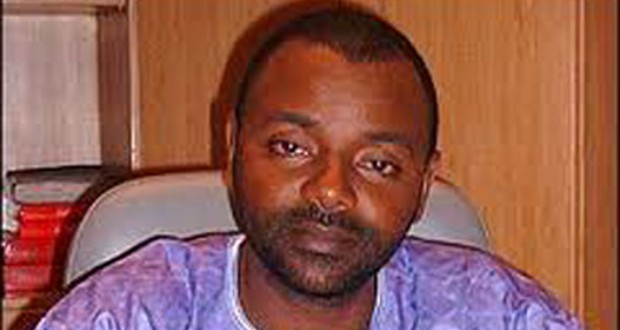
*Questions Jega must answer
By Jide Ajani
In what now appears to be an ego problem for Professor Atahiru Jega, National Chairman, Independent National Electoral Commission, INEC, his messianic pursuit of the lopsided allocation of 30,000 Polling Units, PUs, fresh strong signals suggest that his ability to deliver on successful general elections next year may be suffering a massive discount on account of the many deceptive postulations that he recently made on the matter.
This report will show clearly that but for an agenda that is at best confusing as well as suspect, it should be clear to all lovers of democracy that Jega may have concluded plans to deliver elections molded in a furnace and shrouded in secrecy.
The inherent danger in this fools’ errand is that just as the INEC boss went into the April 2, 2011, elections with misplaced optimism, so is he going into the 2015 general elections with deceptive assurances on a grander scale based on the advantage he has already handed his northern region.
2011: AN EMBARRASSMENT FORETOLD

Jega…INEC boss
Just after voting on April 2, 2011, journalists asked President Goodluck Jonathan for his thoughts about the process. An anxious Jonathan expressed joy that “so far, everything is going smoothly”.
But had Jonathan chosen to cross-check from the man in whose hands the destiny of a guesstimated 73.5million voters laid, Professor Attahiru Jega, the INEC Chairman, Nigeria’s President would have discovered, rather embarrassingly, that Jega had failed the nation. Before that fateful day, Sunday Vanguard had made some revelations about the contract award for voting materials in context, content and volume per figures, the profits therefrom and why Nigerians needed to pay more attention to Jega’s inclination, especially in the light of the tens of billions of tax payers’ money involved – N30,000 (that figure of 30,000), for instance, was paid to each of the about 360,000 registration agents, 8,000 of whom were INEC staff.
It was a flustered Jonathan who was to hear on the airwaves like other Nigerians that Jega had canceled the elections and postponed them. Jega’s statement read in part that morning:
“As you know, the National Assembly (House of Representatives and Senate) elections are supposed to be taking place as I speak. You would also have noticed that things have not proceeded smoothly as expected with the elections.
The reason for this is the unanticipated emergency we have experienced with late arrival of result sheets in many parts of the country. The result sheets are central to the elections and their integrity. Accordingly, in many places, our officials have not reported at the polling units, making it now difficult to implement the Modified Open Ballot Procedure that we have adopted”.
For a man who just less than 24hours earlier assured Nigerians and the international community that all materials were on ground and were ready, Jega’s trust quotient suffered a battering.
For whatever reason best known to him, the INEC boss has embarked on another voyage; but, this time, presenting Nigerians a Greek gift.
L’INEC C’EST MOI – I AM INEC
Just as Louis XIV declared that he was the state, Jega’s serial quest for total domination, as against his status as first among equals, at INEC reflects a certain desperation to achieve a goal. From his attempt to grab the powers of an Accounting Officer of INEC, to his failed attempt to carry out manual, house-to-house registration of voters, which could have again seen camels, cows, sheep and under-aged people, as well as birds and dogs populating the Voter Register, Jega’s approach to running INEC sends the wrong signal. That elections appear to be heading in the right direction is also partly a function of the elements and the growing awareness of Nigerians.
Last week, while fielding questions, the INEC Chairman elevated the art of half-truths and manipulative postulations to another height. Rather than answer the real questions thrown at him, he chose to triangulate. What he did was to present the need for credible elections as a front, ease of access to PUs, instead of providing reasons why less populated areas of the North would have more PUs than densely populated areas of the South.
Jega, it was discovered, through investigations at the INEC headquarters in Abuja, did not consult with key stakeholders like National Commissioners, Resident Electoral Commissioners, RECs, and INEC Operation Directors in the 36 states on the allocation of the 30,000 Pus. He also flagrantly refused to appreciate security agencies’ negative report, via a letter on the potential dangers of his actions regarding the allocation. There is a litigation regarding the allocation which he has refused to address.
And to demonstrate that the electoral boss has a hidden agenda, his refusal to honour the counsel of the Senate Committee on INEC, which insisted that he should stop, speaks volume.
As if possessed by an uncommon spirit, Jega’s manifestly warped position that only a resolution of the National Assembly can stop him is not, as INEC would have put it, cogent and verifiable because when INEC wants to defend its budget or submit itself to oversight, it is to the Committee it goes and not the whole house. Whereas he lied that there was nothing like the execution of the lopsided allocation, he issued a directive to state offices to carry on.
A WEB OF DECEPTION: DAYLIGHT IN JEGA’S MAGIC
Jega was categorical in telling his audience that no “Post-Business Rule Register” exists in INEC. That was a lie! In past reports, and even admittedly by his own presentations, it had always been the selfsame INEC boss who told Nigerians about ‘’Post Business Rule Register”.
Until daylight appeared in his magic because of the voodoo in the allocation of the 30,000 PUs, he had never denied the existence of a ‘’Post Business Rule Register”.
In any case, the question to ask him regarding this is: Which register is INEC using to print and distribute its Permanent Voter Cards, PVCs?
If Jega insists that it is AFIS (Automated Finger Identification System), what is the essence of the Continuous Voter Registration, CVR, an exercise designed to ensure that all the cobwebs associated with AFIS are removed and a smooth transition made to the “Post-Business Rule”? The ‘’Post AFIS Register” contains the electorate who do not have complete finger thumb-prints or the minimum two finger print as well as those with no photo or faded photo.
That is why the AFIS register is neither used for the conduct of elections nor for the printing of PVCs. But the Post Business Rule Register is the register of the highest clean up stage that contains names of voters with complete required minimum fingers thumbprints, an opposite of the
AFIS register that is deficient in integrity and completeness.
It is important to note here that, that is why INEC used it for elections like those of Anambra, Ondo, Ekiti and Osun States, and would be used for the 2015 elections. In fact, Jega himself, in his public address at stakeholder briefings before recent elections, had repeatedly said the ‘’Post-Business Rule Register’’ was the most credible and was the basis for the production of the distributed PVCs in over 24 states and the proposed PVC distribution exercise commencing in Lagos and 11 other states on the 7th November.
Insisting on nationalism and altruism as the basis for his allocation, Jega has never been able to address the basis for allocating to 11 states in the North at over 1,000 PUs each while only Lagos State in the South got same. Interestingly, Jega’s allocation got to war-ravaged states like Yobe and Borno even in the face of fleeing residents.
CARD READERS AND INNOVATION IN CROOKEDNESS
Another truth that Jega is not telling Nigerians is the confusion that is about to blow up in his face. Then, should the ultimate agenda of availing the North the expected advantage from the lopsided allocation be the driving force, this would see crookedness at its best. It has to do with the card readers for the election. The card readers that INEC has opted for are going to be PU-specific (that is each card reader to each PU).
However, because of the time factor and the reality that the prospective voters whose PVC cannot be configured to these new 30,000 PUs, because they require names and codes just like the existing 120,000 PUs, INEC, Sunday Vanguard learnt, would be going for card readers that would not be PU-specific; that is, 30,000 card readers would freelance. Going by the over 21,000 PUs already allocated to the North, the dangerous reality of this is that 21,000 freelancing card readers, in a total of 150,000 PUs, constitute about 14% of the total.
This is significant. That is just one leg of Jega’s magic.
The most dangerous part of it is that of the 30,000, only one zone in the North, the North-West, got 7,906 PUs; and when you add the Federal Capital Territory, FCT, Abuja’s 1,167, you get a total of 9,073; whereas the entire southern Nigeria got just about 8,414.
At the rate of 500 voters to each PU, an allocation of extra over 1,000 to those 11 states in the North is a guarantee for no fewer than over 5,500,000 voters more than the entire southern Nigeria – mind you, the North West and the FCT match the whole of southern Nigeria in this Jega-inspired magic. By the time you add the allocation to North-East and North-Central zones, daylight would enter the crookedness of the whole engagement. Yet, the INEC Chairman wants Nigerians to believe that he is doing all a favour by making PUs closer to the people.
Going beyond the surface, the freelancing card readers to be used for the new 30,000 PUs would have the capability to read just about any PVC, which means votes could be freeloaded, depending on the inclination that holds sway.
INEC’s DATA SHOWS JEGA IS WRONG
Chief among the reasons that have been given for condemning INEC’s skewed creation of new PUs, was that they were created from the whims of its regionally dominated decision-makers and their paternalistic subjectivity, without reference to actual reality from field data.
Hence it was asked how INEC arrived at its proportions while it was still collecting data in the field regarding actual figures of voters in each jurisdiction? An outcome that should inform voter logistics, one of which is the number of polling units required for each jurisdiction.
As the emergent figures from INEC’s authentication of eligible voters and the continuous registration of voters in different jurisdictions show below, INEC was only throwing bones to decide how to create its new PUs, and did worse than an Ifa priest, in its allocation. At least the Ifa priest relies on the gods, but in the case of INEC, its operatives were playing God. Like Obatala, the proverbial Yoruba deity, they were creating PUs at the pleasure of their whim, hence they created 1,200 additional polling units in Abuja, and 1,167 new polling units for the whole of the South-East, whereas extant data, and now emergent data from INEC’s own field reports, as shown below, indicate again that not only does just four states in the South-East far exceeds the voting strength in Abuja, the number of newly registered voters in the zone is 919,097/37,235 or about 25 times more.
From the emerging data below even though the full national data has not emerged, the clear deduction can be made that INEC’s decision-makers who created the new PUs which gave 21,000 to the North and 8,000 to the South, were only playing a regional card instead of doing a professional electoral management job.
Even if the final data results in a double voter strength between the North-West and the South-East, which is unlikely given the estimated voting population of the states yet to be accounted for in both zones from the data above, it cannot justify the 8 to 1 disparity in the allocation of new PUs to both zones.
PU Allocation: Twice as bad (a history)
The brief history of PU allocation is necessary for the reader so as to understand the systematic approach that the North had always used to gain political power. Just as it has become near impossible except the North agrees, the 774 LGAs in the country and the 36 state-structure (with the South having five and the North-West having seven) may never be altered using the 1999 Constitution. Regarding the allocation of PUs, the only southern INEC Chairman, Professor Maurice Iwu, who attempted to alter it did the wise thing when one of his colleagues, Muhammed Jumare, objected, thereby shattering INEC’s consensus approach to tackling issues.
But in Jega’s case, despite the massive outcry of foul, he insists on going ahead.
Sunday Vanguard learnt that during Iwu’s tenure, the Commission agreed to do an increase based on some criteria and the only states that were supposed to benefit were Ondo, Cross River and Taraba. But because of Jumare’s objection, that INEC Board dropped the idea. Dr. Lisa Handley, a renowned consultant on delimitation, advised that INEC required a minimum of three years in-between general elections to commence and conclude a review including managing the challenges and securing National Assembly’s approval. For the delimitation, whatever you do would require Senate’s approval; just as the ward review and then the creation of Pus. Jega only abandoned the delimitation and ward review exercise two months ago. So, why prepare an answer in the mold of PUs when the delimitation and ward review exercise are yet to be done?
Sunday Vanguard has been made to understand that it is part of a grand plan to influence the coming census exercise. Jega’s planned delimitation and ward review is to be based on the unreliable 2006 census figures. Worse still, what was his hurry when, in just under two years, fresh census would be conducted?
At an INEC retreat held at Nike Lake, Handley and some consultants from Liberia and Kenya expressed doubts about the process. The Kenyan, not mindful of our sensitivity in Nigeria, noted that in the northern part of Kenya, they do not have more people unlike in the coastal areas where the population is more. In fact, the Kenyan pooh-poohed Nigeria’s population configuration as an anomaly. But he did not know that a chunk of his audience were from Nigeria’s North.
Read Brief History of Present PU Disposition
here