Thursday, 9 April 2020

Madam CJ Walker: 'An inspiration to us all'


BBC NEWS

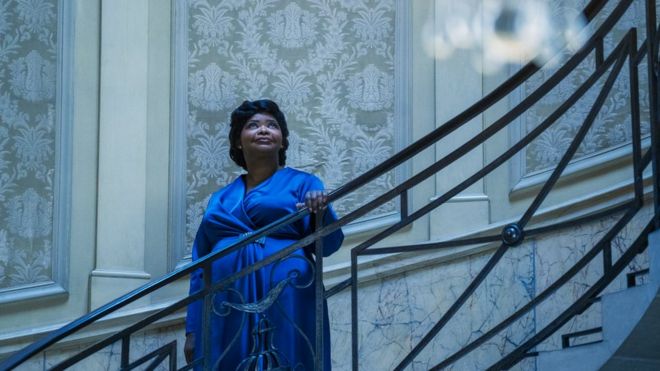
Octavia Spencer starring as Madam CJ Walker in the new Netflix seriesImage copyrightDAVID LEE/NETFLIX
Image captionOctavia Spencer stars in a new Netflix show about the life of Madam CJ Walker

When American journalist A'Lelia Bundles published her first article about her great-great grandmother, Madam CJ Walker in 1982, it was in the "lost women" column of a women's magazine.
That marked quite a comedown for Mrs Walker, who founded a haircare business that made her the country's first self-made female millionaire -"the world's wealthiest coloured woman, the foremost manufacturer and philanthropist of her race", as one newspaper described her when she died in 1919.
To this day, Madam CJ Walker products can be purchased in stores - an unlikely legacy for a woman who toiled in poverty for decades and whose parents had been enslaved.
But "for many years Madam Walker was just a little footnote in history. As a woman who made haircare products, she was really consigned to something trivial," says Ms Bundles, who published the first full-length biography of Mrs Walker, "On Her Own Ground" in 2001.
Now, however, Ms Walker is "having a moment", as Ms Bundles put it in a recent blog post.
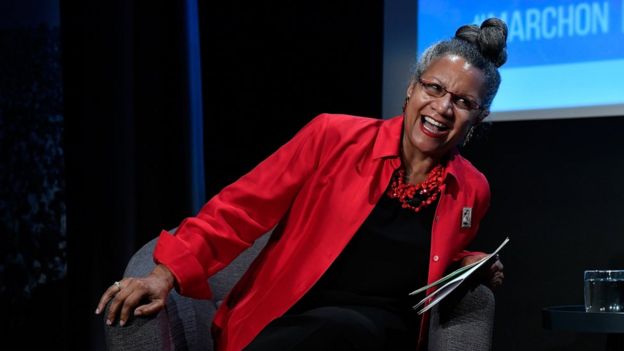
Journalist A'Lelia BundlesImage copyrightGETTY IMAGES
Image captionJournalist A'Lelia Bundles is Madam CJ Walker's great-great-granddaughter, and her biographer

Her story can be found in some 200 books, she's been featured in several recent museum exhibits, including at the Simthsonian in Washington DC, and New York named a street in her honour last year. In March, Netflix released Self-made, a four-part series starring Octavia Spencer about her life and business, inspiring another publicity blitz - and the re-issuing of Ms Bundles' biography.
Meanwhile, her brand has been revived by Unilever subsidiary Sundial Brands, known for its SheaMoisture hair products, which bought the rights in 2013. The foundation started by Sundial's founder, Richelieu Dennis, has also bought her 34-room New York mansion, Villa Lewaro, with plans to turn it into a think-tank for black women entrepreneurs.
"So much of her story is unfortunately still timely," says Elle Johnson, one of the writers of the Netflix series, of the buzz. "When I look at her life and what she accomplished, I can't help but be amazed."
Born in Louisiana in 1867 as Sarah Breedlove, Mrs Walker was orphaned at age seven and a widowed mother by 20. Her struggles with hair loss - a common problem at the time due to infrequent washing - inspired her to start her business, the Madam CJ Walker Manufacturing Co in 1906, which sold a "treatment" that included scalp massage and a special ointment.
By 1916, she employed more than 10,000 agents and ran a network of schools that trained women to enter the hair industry - one of the few ways outside of domestic work that black women could make money at that time.
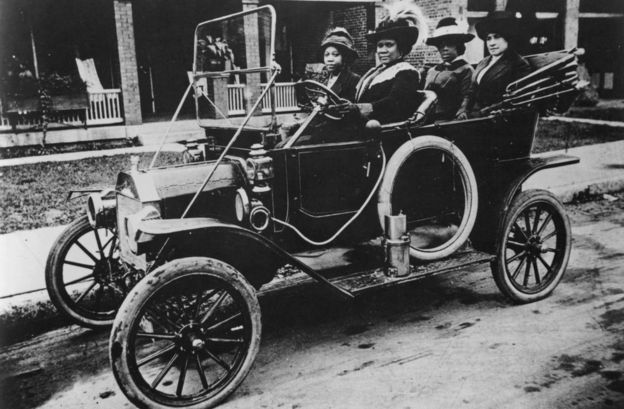
Sarah Breedlove in 1911Image copyrightSMITH COLLECTION/GETTY IMAGES
Image captionMadam CJ Walker behind the wheel in 1911

"I had little or no opportunity when I started out in life . . . I had to make my own living and my own opportunity," she later recounted, according to Ms Bundles' biography. "But I made it. That is why I want to say to every Negro woman present, don't sit down and wait for the opportunities to come, but you have to get up and make them!"

Ahead of her time

Mrs Walker - who renamed herself after marrying her third husband, with the Madam added for branding purposes - was part of a wave of black entrepreneurs that emerged in the decades after slavery to meet the needs of a black population largely ignored by white business.
That included other African-American women with major haircare businesses, such as Annie Turnbo Malone, whose products Mrs Walker sold before developing her own formula. Their rivalry - which Ms Bundles says is exaggerated for dramatic effect - is a central point of the new Netflix series.
But Mrs Walker - whose life also inspired a Duke Ellington opera - remains the best known. That's in part testament to her marketing savvy, including her willingness to stamp her products with her own image - standard fare in the age of social influencers but a bold move when white beauty standards ruled the day.
"There were so many things that we think we invented or came out of Harvard Business School and this is something that this woman was doing 100 years ago," says Nicole Jefferson Asher, one of the writers of the Netflix show. "It was her own innate business acumen."
A frequent public speaker, Mrs Walker also spoke out on political issues like lynching and described the mission of her company in terms of female empowerment. Her obituaries recognised her for her philanthropy as well as her riches.
"Today we talk a lot about social entrepreneurship and businesses having a double bottom line or triple bottom line, [maximising social and environmental good as well as profits]," says Tyrone Freeman, a professor of philanthropic studies at Indiana University, whose book about Mrs Walker's charitable work is due out this fall. "I see Walker doing this 100 years ago."

A range of contemporary Madam CJ Walker productsImage copyrightCRAIG BARRITT
Image captionUnilever revived the Madam CJ Walker brand in 2013

Ms Asher says Mrs Walker's achievements made her a "folk hero" for generations of black women - even if she was often associated, incorrectly, with inventing the hot comb, a hair straightener.
But although her rags-to-riches tale seems made for the movies, until recently it was hard to get Hollywood to buy into stories focused on black stars, Ms Asher says, Now, at a time when America's economic divides are growing wider, racial and gender gaps are in the spotlight, and the power wielded by the country's business elite, through their companies and their philanthropy, is under scrutiny, the questions raised by her story resonate.
"This is a story about female entrepreneurship and the American dream and specifically the black American dream," she says. "The more we learn about history, about this time period, will help us get through the time period we're currently struggling in right now."
But Mrs Walker's story is compelling in her own right, she adds. "The example of that resilience and that determination and ambition really should be an inspiration to us all."

Related Topics

Nigeria visa firm owned by man on fraud charges


Nigerian visa

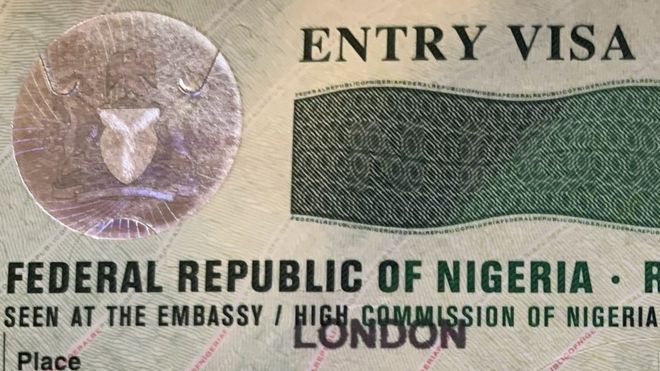
The owner of the Nigerian government-appointed company which produces visas for people wishing to travel to Nigeria from around the world is facing charges of fraud and money laundering in Nigeria in relation to a different company, the BBC has learnt in a joint investigation with the Premium Times.
There is no suggestion of wrongdoing by the visa-processing company and the allegations have no relation to the management of the visa business.
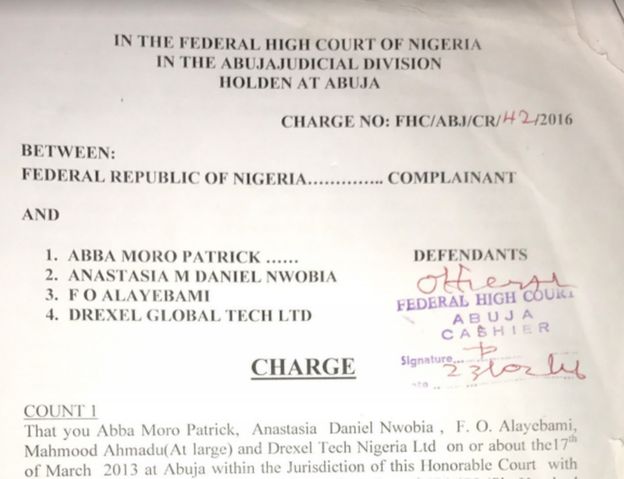
Mahmood Ahmadu, together with his former company Drexel Tech, was charged by the Economic and Financial Crimes Commission (EFCC), on two counts of fraud and three counts of money laundering.
Three others, including former Interior Minister Abba Moro, face charges of fraud and breach of public procurement laws.
All those charged, including Mr Moro and Mr Ahmadu, deny any wrongdoing.
Mr Ahmadu has been highly regarded in Nigeria and was given the Order Of The Niger, a prestigious national award, by President Goodluck Jonathan in 2014.
His lawyers say at no time did the EFCC or any other authority in Nigeria or elsewhere declare him "wanted". They say he is not standing trial. He maintains his innocence and his lawyers deny that he is facing charges.

Stadium stampede

But the EFCC charge sheet alleges that Mr Ahmadu, together with other defendants, was involved in organising a recruitment exercise that led to the deaths of Nigerians.


Job-seekers lie on the pitch after a stampede in Abuja National Stadium, where thousands of job-seekers came to apply for work at the Nigerian immigration department, in Abuja, on March 15, 2014Image copyrightAFP
Image captionJobseekers were crushed in a stampede

Mr Ahmadu's former company, Drexel Tech, was engaged in 2013 to organise a recruitment drive supposedly for 4,000 vacancies in the Nigerian Immigration Service (NIS).
However the NIS later said there were no vacancies. In total, 676,675 Nigerians applied for the jobs, paying 1,000 naira (£2; $2.30) each to register.
When dates for a recruitment exercise were set, several people died during a stampede as thousands of jobseekers scrambled into the Abuja National Stadium to take part in the exercise allegedly organised by the Interior Ministry.
"I was surprised about the recruitment exercise because I was not aware of it," then NIS Controller General, David Paradang, later told the Federal High Court in Abuja.

'Hiding in Europe'

The EFCC has said that Mr Ahmadu, who the charge sheet describes as "at large", and the co-accused, made a total of 677m naira (£1.4m; $1.6m) from the recruitment exercise.


The charge sheet

The charge sheet alleges that Mr Ahmadu and Drexel Tech Nigeria Ltd spent part of the money to purchase property in Abuja while just over 100 million naira, it is claimed, was converted to dollars for the personal use of Mr Ahmadu and the company.
While all the other co-accused, including Mr Moro, presented themselves for questioning and are currently standing trial, the EFCC says that Mr Ahmadu did not come forward to talk about his alleged role in the recruitment exercise.
Back in 2016, then spokesperson of the EFCC, Wilson Uwujiaren, told the Nation newspaper: "We may enlist Interpol and relevant agencies in the UK to track down Mahmood Ahmadu. He used to have companies in the UK and with his biometrics, there is no hiding place for him. We have already watch-listed him."
Last week, the EFCC's current spokesperson, Tony Orilade, told the BBC that there is still a case against Mr Ahmadu.
"The charge sheet reads that he is at large. The position of the EFCC is clear: the proceeds of the recruitment remains illegal...
"The EFCC is aware he is hiding in Europe. He has not been seen since arraignment."


Presentational grey line

You may also be interested in:


Presentational grey line

Mr Ahmadu's visa company, Online Integrated Solutions (OIS), states on its website that it is present and conducting business on behalf of the Nigerian Government in 25 major cities across the world in Nigeria, China, Lebanon, UAE, Malaysia, Italy, Netherlands, South Africa, USA , France, Germany, UK, India, and Canada.
The company prides itself as "a specialist Nigerian visa and passport application agency" in partnership with diplomatic missions across the world to "expedite hitch-free travel" to global destinations. The company makes millions of dollars every year.
The BBC made numerous attempts to contact Nigerian Interior Ministry and the country's High Commission in London. They did not offer any response.
The BBC contacted the UK's Home Office and the Foreign Office who were not prepared to comment on the case.
The UK's Department for Business, Energy and Industrial Strategy said that "a foreigner charged with a crime abroad can still set up a company and run it in the UK, if no arrest warrant has been issued".

Related Topics

Sunday, 5 April 2020

Drogba and Eto'o slam 'Covid-19 test trials on Africans'


BBC  NEWS


Two African football legends have condemned comments by two French doctors who recently suggested, in a TV discussion about medical trials for a Covid-19 vaccine, that they be used on Africans first.
Didier Drodga said that the suggestion was taking "African people as human guinea pigs," adding in another tweet that "Africa isn't a testing lab":


It is totally inconceivable we keep on cautioning this.
Africa isn’t a testing lab.
I would like to vividly denounce those demeaning, false and most of all deeply racists words.

Helps us save Africa with the current ongoing Covid 19 and flatten the curve.

Former Cameroonian football Samuel Eto'o called the doctors "assassins".
The doctors' comments were also criticised by ant-racist groups and many others commenting online.
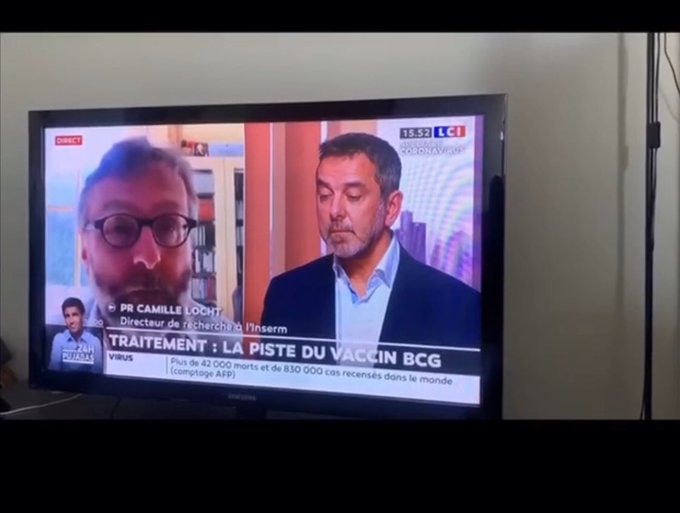
The 1 April clip from French TV channel LCI featuring Dr Jean-Paul Mira and Dr Camille Locht has been widely shared online.
In it Dr Mira, from Cochin hospital in Paris, proposes that a medical trial for a Covid-19 vaccine should be carried out in Africa as had been done in studies relating to Aids:
Quote Message: If I can be provocative, shouldn't we be doing this study in Africa, where there are no masks, no treatments, no resuscitation? A bit like it is done elsewhere for some studies on AIDS. In prostitutes, we try things because we know that they are highly exposed and that they do not protect themselves."
Dr Camille Locht, from the French National Institute of Health and Medical Research (Inserm), had been talking about a study being carried out in Europe and Australia, but agreed with Dr Mira that a trial should also be carried out in Africa:
Quote Message: You are right, we are in the thinking of a parallel study in Africa to use this same approach with BCG placebos."
Watch the controversial segment below:
Following the controversy, Inserm said in a statement that the video was “the subject of erroneous interpretations”:
Its statement said that:
“Clinical trials to test the efficacy of the BCG vaccine against Covid-19 are... about to be launched in European countries and in Australia. If there is indeed a reflection around a deployment in Africa, it would be done in parallel with these. Africa must not be forgotten or excluded from research because the pandemic is global."
BCG is a vaccination mostly given to babies in countries where tuberculosis is common.
Some recent studies have suggested that countries where BCG is administered reported fewer deaths related to Covid-19.


Social embed from twitter