Tuesday, 11 October 2022

‘Exploited’ foreign doctors worry about risk to UK patients

 BBC


Augustine
Image caption, 
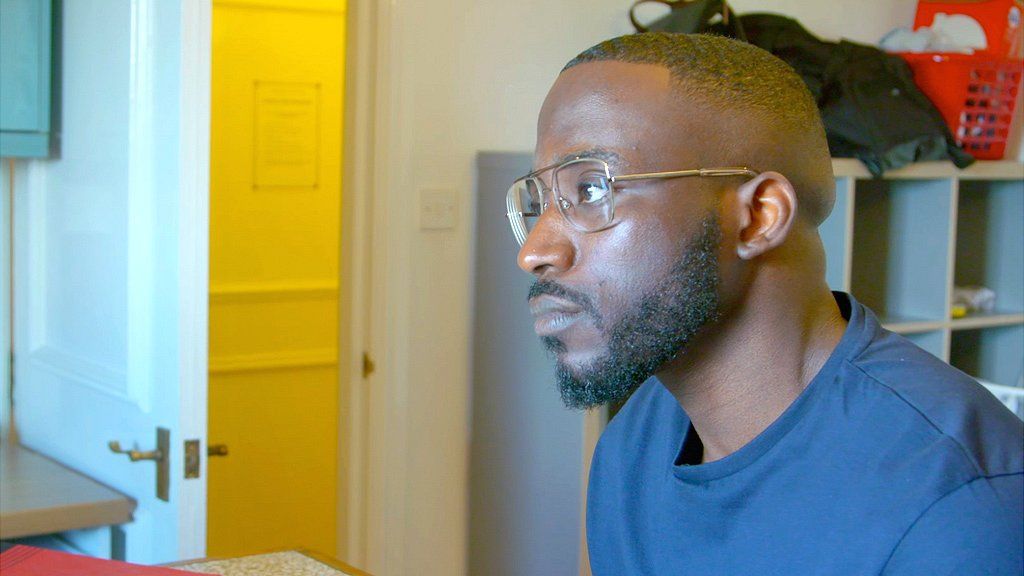
Augustine came to the UK from Nigeria to work as a doctor in a large private hospital in West Yorkshire

Doctors recruited from some of the world's poorest countries to work in UK hospitals say they're being exploited - and believe they're so overworked they fear putting patients' health at risk.

A BBC investigation has found evidence that doctors from Nigeria are being recruited by a British healthcare company and expected to work in private hospitals under conditions not allowed in the National Health Service.

The British Medical Association (BMA) has described the situation as "shocking" and says the sector needs to be brought in line with NHS working practices.

The BBC has spoken to several foreign medics - including a young Nigerian doctor who worked at the private Nuffield Health Leeds Hospital in 2021.

Augustine Enekwechi says his hours were extreme - on-call 24 hours a day for a week at a time - and that he was unable to leave the hospital grounds. He says working there felt like being in "a prison". 

The tiredness was so intense, he says, there were times he worried he couldn't properly function. 

"I knew that working tired puts the patients at risk and puts myself also at risk, as well for litigation," he says. "I felt powerless… helpless, you know, constant stress and thinking something could go wrong."

Nuffield Health disputes those working hours, saying its doctors are offered regular breaks, time off between shifts, and the ability to swap shifts if needed. The company adds that "the health and wellbeing of patients and hospital team members" is its priority. 

Augustine was hired out to the Nuffield Health Leeds Hospital from a private company - NES Healthcare. It specialises in employing doctors from overseas, many from Nigeria, and using them as Resident Medical Officers, or RMOs - live-in doctors found mainly in the private sector.

Augustine says he was so excited to be offered a job that he barely looked at the NES contract. In fact it opted him out of legislation that protects UK workers from excessive working hours - the Working Time Directive - and left him vulnerable to a range of punishing salary deductions.

line

Listen to File on 4 - Paul Kenyon investigates the 'brain drain' of doctors from developing countries to work in the UK

line

Augustine is far from alone. The BMA and the front line lobbying group the Doctors' Association has given the BBC's File on 4 and Newsnight exclusive access to the findings of a questionnaire put to 188 Resident Medical Officers. Most of the doctors were employed by NES but some were with other employers. 

It found that 92% had been recruited from Africa and most - 81% - were from Nigeria. The majority complained about excessive working hours and unfair salary deductions.

For years now, the World Health Organization (WHO) has warned against the "active recruitment" of doctors and nurses from developing countries with severe shortages of medical personnel. The WHO has compiled a list of 47 such countries - most of them in Africa. The UK government has incorporated that list into its own code of practice - calling it the "red list". In effect, it makes Nigeria a no-go destination for British medical recruiters.

So how did the doctors come to be working in the UK in the first place? We travelled to Nigeria and witnessed another troubling side to this story.

In an exam hall in Lagos, the country's biggest city, we found hundreds of doctors queuing to take what's called a Professional and Linguistic Assessments Board test - or PLAB 1. The paper is set by the General Medical Council in London and is the first step required by the British medical authorities to secure a licence to work in the UK. 

The doctors we spoke to said they were attracted by the potential of higher salaries and better working conditions. The event was being overseen by staff from the British Council - an organisation sponsored by the Foreign Office.

In Lagos, doctors queue to take PLAB 1 exams - the first step towards getting them a licence to work in the UK
Image caption, 
In Lagos, doctors queue to take PLAB 1 exams - the first step towards getting them a licence to work in the UK

The GMC also offers the exams in several other red-list countries - Ghana, Sudan, Pakistan and Bangladesh. 

Both the GMC and British Council deny they are involved in "active recruitment" and say they're simply helping provide a service for doctors wanting to come to the UK independently - something that is allowed under the guidelines.

In Augustine's case, he was studying for the second part of those PLAB exams in the UK, when he was approached by NES Healthcare and later offered visa sponsorship and a potential job.

While that does appear to have been "active recruitment" - NES says it wasn't, because it is not a recruitment agency and, as such, only engages with doctors from overseas once they've already committed to practising in the UK. But the Department of Health and Social Care told us the UK code of practice did apply to NES - so the company was in breach of it.

We spoke to several African doctors recruited in this way by NES. They all had similar stories about what the terms and conditions of their contracts meant in reality, once they had been hired out to private UK hospitals.

Dr Femi Johnson
Image caption, 
"It's not humanly possible to do that every day for seven days," says Dr Femi Johnson

Dr Femi Johnson was sent to a different hospital to Augustine, but says he was also expected to work 14 to 16-hour days and then be on call overnight. "I was burnt out," he says. "I was tired, I needed sleep. It's not humanly possible to do that every day for seven days."

But when he needed a break because he was too exhausted to continue, NES were entitled to deduct money from his salary. The company says that is to cover the cost of finding a replacement doctor, but Femi says it leaves NES doctors in a terrible dilemma.

"In situations like that, I always make that internal discussion with my inner self - 'Femi are you doing right by yourself and are you doing right by the patient?'" he tells us. "Unfortunately, I haven't always been able to answer that question." 

Dr Jenny Vaughan, the Doctors' Association
Image caption, 
"This is a slave-type work," says Dr Jenny Vaughan from the Doctors' Association

Some NES doctors have received help from Dr Jenny Vaughan from the Doctors' Association. She receives many complaints from Resident Medical Officers and says the UK healthcare system has developed into two tiers - one for NHS doctors, the other for international recruits working in the private sector.

NHS doctors can only be scheduled to work up to 48 hours, and if they request, up to 72 hours a week.

"No doctor in the NHS does more than four nights consecutively because we know that it's frankly not safe," says Dr Vaughan.

"This is a slave-type work with… excess hours, the like of which we thought had been gone 30 years ago. 

"It is not acceptable for patients for patient-safety reasons. It is not acceptable for doctors. "

Emma Runswick of the British Medical Association, which supports all UK doctors and medical students
Image caption, 
Emma Runswick of the BMA describes the situation as "so exploitative it beggars belief".

We took our findings to the BMA - and its deputy chair, Emma Runswick. She told us the situation was a "disgrace to UK medicine". 

"Our international colleagues have come a long way to the UK, and have found conditions so exploitative it beggars belief." 

NES Healthcare told us that our "feedback about doctors' experiences" with the company was "extremely positive". It says it provides doctors "with a safe and supportive route to pursue their career choice in the National Health Service, and in the UK healthcare system more generally, and that their work is of "great benefit to the British public."

Monday, 1 August 2022

A captive president, blighted country, docile people


Columnists  

By Chris Gyang


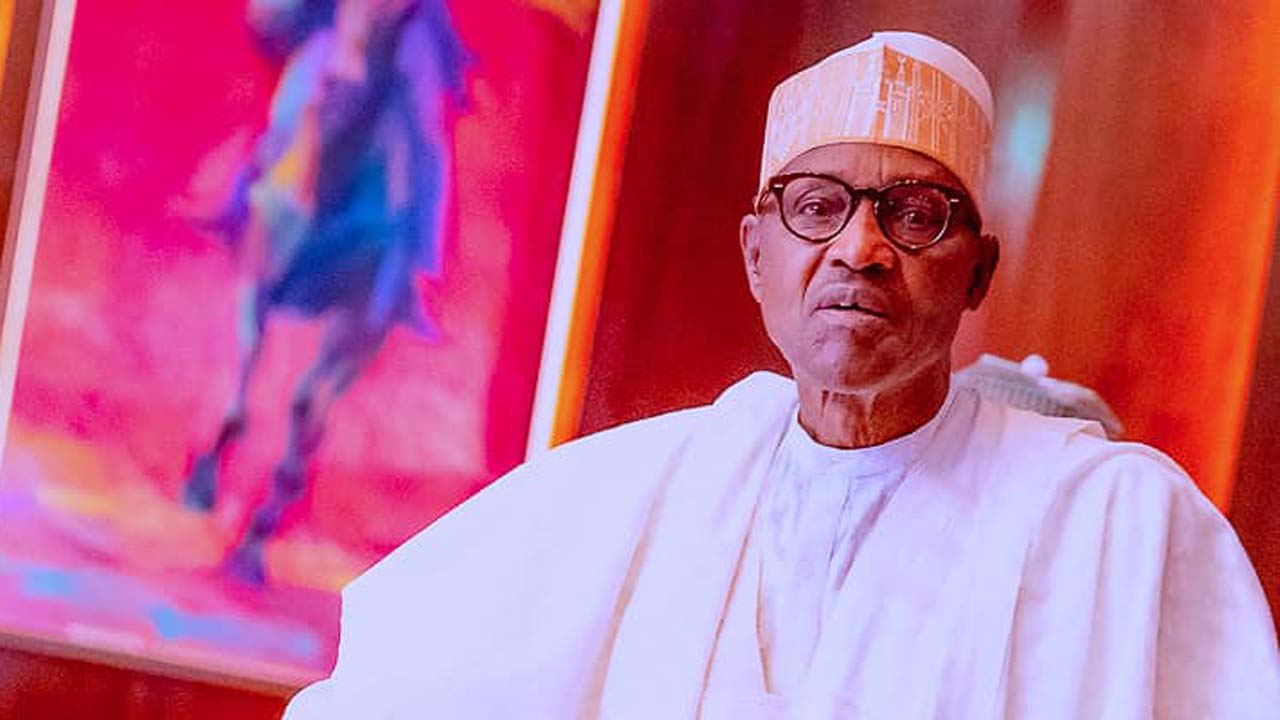
Buhari

Those Nigerians who once thought that the Buhari presidency would take our country to a destination better than this forlorn outpost of stasis, anarchy and overwhelming misery now know better. They are shaking their heads in utter regret, and sheer bewilderment


When we warned, even as early as the days before the 2015 presidential vote, that Buhari’s rabid sectionalism and extreme religious proclivities would push Nigeria to a sad precipice, we were excoriated and branded as hateful and irrational peddlers of Islamophobia. But those who pointed accusing fingers at us then are now also crying, painfully – victims of Islamist terrorism, Fulani herdsmen’s terrorism and expansionism, armed banditry, kidnapping for hefty pay-offs and sundry criminalities that have become the chief themes of Buhari’s reign so far.

But, lest we forget, this is the man whom Boko Haram once pencilled down as their spokesman before he became president – based on his strident support for them (once upon a time?) This is a president in whose cabinet a popular and self-confessed Al-Qaeda apologist snugly perches – one of the president’s closest allies.

So what had Nigerians expected? To expect anything other than the prevailing atmosphere of siege and dark clouds hanging all over the country would amount to deluding ourselves, and even Mr Buhari himself. After all, Nigerians are receiving exactly what they bargained for. Moreover, it is said that countries get the kind of leaders they deserve.

In an editorial condemning a gift of one million dollars, President Buhari surreptitiously offered the terrorist government of Afghanistan, that the Nigerian Tribune (April 4, 2022) captured the very flavour of the last seven years. “Nigerians are genuinely fed up with the Buhari administration and cannot wait for it to run down its time and depart,” the newspaper declared.

Then it continued: “Not only is the president incompetent, he has shown time and again that he is also insensitive. The criticisms against the president when he was running for office in 2015 was that he was too sectarian and provincial and that he did not have the imagination to run a local government, let alone a country as complex as Nigeria.”

And with a finality that has a ring of tragedy, tinged with regret, the editorial ended: “Sadly, the time has proved those critics right.”

Terrorists may soon knock on the gates of the presidential villa, Abuja. Bishop Matthew Kukah warned the Buhari administration to guard against insurgency turning the north into another Afghanistan. Recall that on August 15, 2021, Islamist terrorists, the Taliban, took control of Kabul, the Afghanistan capital.

The Daily Post (December 26, 2021) reported the cleric as raising the alarm that “so many communities have been turned into gulags of misery, death, pain and perfidy,” and called out that “we must move quickly before Arewa, our beloved Arewa, descends into ‘Arewanistan’ (coined from Afghanistan).” But, apparently, the Bishop’s warning has not been taken seriously.

Today, not only is the entire north and other parts of the country reeling from wanton acts of terrorism and armed attacks, the possibility of terrorists reenacting the Kabul take-over in our country’s capital is growing by the day. Consider these. On July 5, terrorists attacked the Kuje prison in the federal capital and freed 600 of their compatriots held in the facility.

Then on July 24, two officers and eight soldiers were killed by terrorists during an ambush in Bwari, also the nation’s city. It is worthy of note that the Taliban seized the capital city without firing a shot after waging a 20-year bloody jihad against the Americans and the Afghan administration. The insurgents were aided and abetted by government officials – both within the military and state establishments – who later seamlessly melted into the new Taliban administration.

And in a move that shocked Nigerians and most of the international community, which regards that government as a pariah, it emerged early this year that President Buhari had secretly donated $1 million to the Taliban as so-called humanitarian aid through the Organisation of Islamic Cooperation (OIC). Latest international security reports have revealed that Afghanistan is gradually becoming a safe haven and training ground for Islamist terrorists from all over the world.

And considering the strong links between Nigeria’s Boko Haram, Ansaru and Islamic State in West Africa Province (ISWAP) and the more formidable and brutal Islamist terrorist groups such as Al-Qaeda and Islamic State in Iraq and the Levant (ISIL) which have global networks, this should be a source of serious concern to Nigerians and the international community.

What with the puzzling and persistent (some say deliberate) failure of the Buhari government to rein in Nigeria’s terrorists, armed Fulani herdsmen and well-armed bandits and kidnappers, As we have seen above, some of them have become so elusive, powerful and audacious that they have made the nation’s capital city a routine playground under the watch of Mr Buhari – a retired Army General.

To be continued tomorrow
Gyang is the Chairman of the NGO, Journalists Coalition for Citizens’ Rights Initiative (JCCRI). Emails: info@jccri-online.org; chrisgyang01@gmail.com

Friday, 29 July 2022

Nigeria to penalise BBC for bandit warlords documentary

 Rhoda Odhiambo

BBC West Africa correspondent, Lagos


The Nigerian government says it will penalise the BBC over a documentary made by its investigations programme Africa Eye about the so-called bandit warlords of Zamfara.

The country’s information minister says the documentary glorifies the militants' actions, who have terrorised residents over years in north-western Nigeria.

Lai Mohammad said the penalties against BBC will be set by the country’s National Broadcasting Commission - although the body does not regulate international media houses.

The public affairs director of the commission has told the BBC that sanctions will be communicated to the corporation and a local newspaper, Daily Trust, if they are found guilty of breaching the journalism code of conduct. 

In a statement, the BBC said Africa Eye often deals with controversial and complex subjects. It also said the story was overwhelmingly in the public interest and that it stands by its journalism.

The documentary has been widely discussed in Nigeria for the last three days. People here have questioned the government’s efforts to contain rising levels of insecurity in the country, especially in the north, where the militant groups operate.

Last month, the Zamfara governor asked residents to arm themselves against the militants and announced a shoot-to-kill order on anyone found using a motorcycle. 

The governor defended his move saying that it will beef up security. 

Video content

Video caption: Face to face with the bandit warlords of Nigeria

Sunday, 3 July 2022

Nigerians on death row abroad

By Editorial Board
03 July 2022   |   4:10 am

Report that no fewer than 800 Nigerians are awaiting execution in South Asian countries over drug-related crimes is devastating. It merely underscores the degenerate state of a country whose image on the global arena is fast waning. Yet, Nigeria is a country with great potentials in human and material resources, begging only for responsible and purposeful leadership. This type of news adds to making the country a laughing stock for which the country’s government at all levels should be thoroughly ashamed.

But beyond the lamentation, the awful state of the country, which literally pushes the citizens, especially youths, out of the country in droves is worrisome. Additionally, Nigerians must be reminded that inordinate ambitions exercised with impunity and regardless of other countries’ laws will only lead them to the path of destruction, as many are learning painfully. This should serve as lessons to would-be travelers.

Nevertheless, there would have been no mass emigration of Nigerians to all corners of the globe if the home front were conducive for living. Truth is that Nigeria has been virtually destroyed by inept leadership. The socio-economic condition is dreadful thereby leaving Nigerians with little option than to flee the country.

However, it is one thing to migrate and another thing to obey the laws of the receiving countries. Nigerians who choose not to abide by the rules and regulations in whichever country they find themselves should expect no pity from any quarters. In any event, unless they claim not to have been given fair trial in accordance with international standard, they have invariably tied the hands of their government, which is bound to respect the laws of other countries.

The Principal Staff Officer, Training, Media and Advocacy of the National Drug Law Enforcement Agency (NDLEA), Imo State Command, Mr. Shehu Lamuwa, had at a one-day security sensitisation programme, organised by the National Orientation Agency (NOA) for students in Owerri, disclosed that some 800 Nigerians were awaiting execution abroad. Presenting a lecture on “Drug Abuse: Prevention and Strategies”, Lamuwa, who is also the Assistant Commander of Narcotics, said about 14.5 million Nigerians indulge in drug abuse, through intake of hard substances, not prescribed but prohibited drugs.

He identified laws and norms favourable to drug uses as availability, accessibility as well as affordability of hard drugs, extreme poverty, political and economic instability as facilitators of the menace. He also blamed improper parenting, anti-social behaviours, early exposure to drug use especially among teenagers, among others. Thus, having been exposed to the use of illicit drugs, many youths leave the shores of the country in that frame. And while in foreign countries, rather than eschew the bad conduct and pursue legitimate business, some choose to indulge in the same drug use until they are apprehended.

Not long ago, President Muhammadu Buhari lamented illegal youth migration to Europe and other countries in the process of which many promising young Nigerians have lost their lives, while the lucky ones lose their bearing in life. The president’s concern was touching, but what would be more meaningful is to set an example in Nigeria by creating an environment with opportunities for all.

Otherwise, blatant misrule and economic mismanagement by a depraved leadership across the country, which have left the populace in abject poverty, will continue to push the young ones out in search of an elusive better life abroad. With mass unemployment and grinding poverty, young people have been left with no other option than to seek greener pastures elsewhere, even at the risk of losing their lives.

The trend is reversible if only the political leadership would shun corruption, selfish indulgence and show commitment to the welfare of the people. The resources to build a strong and virile economy are there and making the home front attractive is the only solution to the embarrassment of migration. Among other things, there is need to curb unemployment among the youths, which has reached an alarming level. Nigeria’s unemployment rate stands at 33 per cent in 2022 and still rising. The figure is now presumed to have notched up a few more points.

Not long ago, the National Bureau of Statistics (NBS) noted that a total of 22.45 million of the total labour force of 76.96 million were either unemployed or under-employed in the last quarter of 2015 compared to 20.7 million in Q3. Rather than abate, the unemployment crisis has worsened since the middle of 2016 as a result of the economic recession. Many companies have either cut down on operations or folded up completely, leading to mass layoff of workers. Consequently, thousands of people have been pushed to the edge, prompting them to flee their homeland.

The tragedy is compounded by the fact that the citizens are largely victimised by the unbridled exploitation perpetrated by the political class. The youths are particularly distressed as thousands graduate from schools yearly without employment or any hope of a good life. These conditions compel them to seek to leave their country, under any condition, by any means and to just about anywhere. The consequences of these desperate moves have often been fatal.

Granted that the system does not give young Nigerians any reason to have faith in their country, those who are bent on leaving the country should abide by the law to be on the safe side. At the same time, the affected countries should not unduly profile Nigerians. Those who fall short of the law should be given fair trial by allowing them to have full legal representation and rights. The Nigerian authorities home and abroad still have an onerous duty to follow up on the convictions with a view to ascertaining the fairness of their prosecution.