Sunday, 9 May 2021

Electoral Act: Unheeded groundwork for credible poll

Sunday Magazine

09 May 2021   |   4:20 am


Twenty-two years after Nigeria’s return to presidential democracy, politicians have continued to play tricks with the country’s Electoral Act. Even with several attempts to retool the crucial implement for credible polls, only in 2010, 11 years into the nascent democracy could a review, albeit imperfect alteration, sail through.

Overtime, Nigerians saw how elections came and went as hollow rituals, reflecting, not the will of the electorate, but the desire of the political godfathers and electoral merchants. Violence, voter intimidation, electoral heist of all shades, defalcation and manipulation of poll outcomes became the shameful order of the day and feature of Nigeria’s electoral processes.

It was worse in 2007. That was good eight years after the country rejoined the path of participatory democracy. The main beneficiary of the flawed 2007 general election, President Umaru Musa Yar’Adua, confessed that the election that brought him to the Presidency did not meet the acceptable minimum standards.

As a corollary, the then President set up the retired Justice Mohammed Lawal Uwais Electoral Reform Committee, which made far reaching recommendations on how to improve and sanitize the country’s electoral system.

Going by superficial and seeming rubberstamp judicial pronouncements that certified faulty elections, the Uwais Committee suggested ways of restoring confidence in Electoral Petition Tribunals. The learned jurist and his team were of the firm belief that resolving disputes arising from election irregularities would help to restore public confidence and thereby enhance the survival of Nigeria’s democracy.

Working in cahoots with desperate politicians, lawyers made sure that they burdened petitioners not only with the onus of proof, but also the task of proving substantial non-compliance with the Electoral Act. Knowing that this loophole helps the electoral umpire to violate extant procedures, the Uwais panel recommended that the burden of proof, or what the lawyers call the doctrine of substantial compliance, should be on the Independent National Electoral Commission (INEC).

This lacuna has been the easily available exit pathway for perpetrators of electoral treachery, because by laying two crucial evidential burdens on a petitioner, the violators are allowed massive freedom to celebrate their ignoble conquest. Imagine where a candidate in an election has to prove, not only irregularities and non-compliance with the electoral law, but also that the irregularities and non-compliance affected the results of the election ‘substantially’.

That onus is akin to asking the petitioner to provide the horns of a dog. Side by side with restoring confidence in post-election resolution of complaints is the need to modernize the voting and collation process. The Uwais committee did not lose sight of its significance to the redemption of Nigeria’s electoral system.

However, the committee maintained that addressing INEC’s inefficiency would go a long way to ameliorating such other infringements in the system. By virtue of paragraph 15, Part 1 of the Third Schedule of Nigeria’s 1999 Constituton, as amended, INEC is empowered to conduct elections, undertake voters registration, regulate and monitor political parties.

The Electoral umpire has been complaining of institutional bottlenecks, conflicting legal frameworks as well as poor logistic and necessary manpower to deliver on its wide mandate. Corruption and use of adhoc staff have also impeded the effectiveness of INEC.

The judiciary has however come to the rescue following the recent conviction of a don for electoral offences during the 2019 general election in Akwa Ibom State.
However, last Friday’s Apex Court ruling on INEC’s power to deregulate political parties, came as watershed in the ongoing efforts at reforming Nigeria’s electoral system. The judicial pronouncement, which would strengthen INEC’s hands in improving political parties’ performance, now puts greater stress on the need for a new Electoral Act that closes other legal gaps.

In the judgment delivered by Justice Adamu Jauro, the Supreme Court, asserted that the deregistration of National Unity Party (NUP), one of the 74 parties deregistered last year, was done in line with the laws and compliance with the extant provisions of the Constitution and Electoral Act.

INEC chairman had, while explaining the rationale for pruning down the number of functional political parties, said the action was to pave way for a concise preparation for the next general election cycle in 2023. As such, having trimmed down the number of  political parties to participate in future elections, INEC could now concentrate on other pressing issues, especially the review of the Electoral Act.

This is where the buck passes to the National Assembly. Although the Ninth NASS stated that its focus would be on early passage of the Electoral Act and the Petroleum Industry Bill, the federal legislature has been vacillating in tinkering with the amended Electoral Act, which President Buhari withhold assent two years ago.

The Eighth NASS led by Dr. Bukola Saraki had dabbled into sequence of elections and electronic transfer of outcome of balloting, but the President, citing nearness to the 2019 poll, withhold assent, just as INEC kicked against the lawmakers’ decision to set the sequence of elections.

It is obvious that political considerations particularly search for adventitious advantages preoccupy lawmakers’ whenever the issue of producing a foolproof Electoral Act arises. For instance, although the Ninth National Assembly, through the Deputy President of Senate, signaled an early intention to perfect the 2019 Electoral Act, lethargy set in.

The Electoral Act Amendment Bill 2019, sponsored by Senator Ovie Omo-Agege, struggled to pass through Second Reading and stalled. Prior to the blankness, the bill provided for electronic voting. Section 52(2) of the bill stipulated: “The commission may adopt electronic voting or any other method of voting in any election it conducts as it may deem fit.”

Omo-Agege’s bill also sought to compel INEC to operate an electronic database through which all results in an election should be transmitted, stipulating that data of accredited voters must be transmitted by card readers to the central database upon the conclusion of the accreditation of voters.

There was also another effort by the Ninth NASS to lift the veil on the Electoral Act. Senator Ajibola Basiru (Osun Central) had, in “Electoral Act (amendment) bill, 2021, explored the possibility of amending the 1999 Constitution, so as to compel the use of card readers during elections.

So far, with barely two years to the 2023 general elections, the National Assembly has engaged in motions without movement in the pursuit of the crucial implement for credible elections. Could it be the lawmakers are waiting for the election to draw closer so as to embark on another rushed exercise?

There are no doubt different perspectives to the challenges of getting the Electoral Act ready. Whether the lawmakers are waiting for the body language of the Presidency or they are bogged down by the interparty intrigues within the National Assembly, Nigerians are worried by the absence of an updated Electoral Act.



 

Zik’s voice that voided planned secession by the North in 1953


(FILES) In this file photo taken on November 16, 1955 Picture released on November 16, 1955 of first president of Nigeria, Nnamdi Azikiwe from 1963 to 1966. – On October 1, 2020, Nigeria celebrates its 60th independence from Britain. (Photo by – / AFP)


n 1953 when Northern Nigerians were beginning to consider secession from the Nigerian colony that would soon be a nation, Nnamdi Azikiwe gave a speech before the caucus of his political party, the National Council of Nigeria and the Cameroons (NCNC) in Yaba, Nigeria on May 12, 1953. That speech, while not disallowing secession, suggested that there would be grave consequences if the Northern region became an independent nation.

I have invited you to attend this caucus because I would like you to make clear our stand on the issue of secession. As a party, we would have preferred Nigeria to remain intact, but lest there be doubt as to our willingness to concede to any shade of political opinion the right to determine its policy, I am obliged to issue a solemn warning to those who are goading the North towards secession. If you agree with my views, then I hope that in course of our deliberations tonight, you will endorse them, to enable me to publicize them in the Press.

In my opinion, the Northerners are perfectly entitled to consider whether or not they should secede from the indissoluble union which nature has formed between it and the South, but it would be calamitous to the corporate existence of the North should the clamour for secession prevail. I, therefore, counsel Northern leaders to weigh the advantages and disadvantages of secession before embarking upon this dangerous course.

As one who was born in the North, I have a deep spiritual attachment to that part of the country, but it would be a capital political blunder if the North should break away from the South. The latter is in a better position to make rapid constitutional advance, so that if the North should become truncated from the South, it would benefit both Southerners and Northerners who are domiciled in the South more than their kith and kin who are domiciled in the North.

There are seven reasons for my holding to this view. Secession by the North may lead to internal political convulsion there when it is realized that militant nationalists and their organizations, like the NLPU, the Askianist Movement, and the Middle Zone League, have aspirations for self-government in 1956 identical with those of their Southern compatriots. It may lead to justifiable demands for the right of self-determination by non-Muslims, who form the majority of the population in the so-called ‘Pagan’ provinces, like Benue, Ilorin, Kabba, Niger and Plateau, not to mention the claims of non-Muslims who are domiciled in Adamawa and Bauchi Provinces.

It may lead to economic nationalism in the Eastern Region, which can pursue a policy of blockade of the North, by refusing it access to the sea, over and under the River Niger, except upon payment of tolls. It may lead to economic warfare between the North on the one hand, and the Eastern or Western regions on the other, should they decide to fix protective tariffs which will make the use of the ports of the Last and West uneconomic for the North.

The North may be rich in mineral resources and certain cash crops, but that is no guarantee that it would be capable of growing sufficient food crops to enable it to feed its teeming millions, unlike the East and the West. Secession may create hardship for Easterners and Westerners who are domiciled in the North, since the price of food crops to be imported into the North from the South is bound to be very high and to cause an increase in the cost of living. Lastly, it will endanger the relations with their neighbours of millions of Northerners who are domiciled in the East and West and Easterners and Westerners who reside in the North.

You may ask me whether there would be a prospect of civil war, if the North decided to secede? My answer would be that it is a hypothetical question which only time can answer. In any case, the plausible cause of a civil war might be a dispute as to the right of passage on the River Niger, or the right of flight over the territory of the Eastern or Western Region; but such disputes can be settled diplomatically, instead of by force.

Nevertheless, if civil war should become inevitable at this stage of our progress as a nation, then security considerations must be borne in mind by those who are charged with the responsibility of government of the North and the South. Military forces and installations are fairly distributed in all the three regions; if that is not the case, any of the regions can obtain military aid from certain interested Powers. It means that we cannot preclude the possibility of alliance with certain countries.

You may ask me to agree that if the British left Nigeria to its fate, the Northerners would continue their uninterrupted march to the sea, as was prophesied six years ago? My reply is that such an empty threat is devoid of historical substance and that so far as I know, the Eastern Region has never been subjugated by any indigenous African invader. At the price of being accused of overconfidence, I will risk a prophecy and say that, other things being equal, the Easterners will defend themselves gallantly, if and when they are invaded.

Let me take this opportunity to warn those who are making a mountain out of the molehill of the constitutional crisis to be more restrained and constructive. The dissemination of lies abroad; the publishing of flamboyant headlines about secessionist plans, and the goading of empty-headed careerists with gaseous ideas about their own importance in tile scheme of things in the North is being overdone in certain quarters. I feel that these quarters must be held responsible for any breach between the North and South, which nature had indissolubly united in a political, social and economic marriage of convenience. In my personal opinion, there is no sense in the North breaking away or the East or the West breaking away; it would be better if all the regions would address themselves to the task of crystallizing common nationality, irrespective of the extraneous influences at work. What history has joined together let no man put asunder. But history is a strange mistress which can cause strange things to happen!
•Culled from https://www.operanewsapp.com/ng/en/share/detail?news_id

Wednesday, 24 March 2021

Dan Gertler - the man at the centre of DR Congo corruption allegations

BBC
Franz Wild is the editor of the Bureau of Investigative Journalism's project looking into London's role enabling overseas corruption.
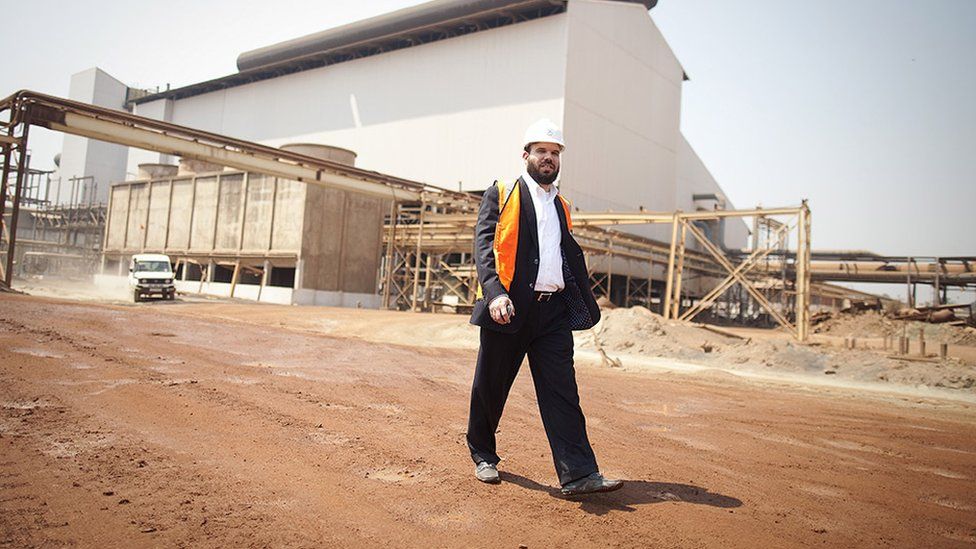
Dan Gertler walks through the Katanga Mining Ltd. copper and cobalt mine complex during a tour of the operations in Kolwezi, Democratic Republic of Congo, on Wednesday, Aug. 1, 2012.image copyrightBloomberg via Getty Images
image captionDan Gertler, pictured at a mine in the Democratic Republic of Congo in 2012, was initially sanctioned in 2017

The Biden administration recently re-imposed sanctions on Israeli businessman Dan Gertler over alleged massive corruption in the Democratic Republic of Congo's lucrative mining business. Journalist Franz Wild reports on his remarkable rise, and his alliance with former President Joseph Kabila which even saw him being appointed a Congolese diplomat.

When the United States initially imposed sanctions on the mining magnate in 2017, he hired President Donald Trump's lawyer to get them removed.

The sanctions had been introduced for his allegedly corrupt relationship with DR Congo's former President Joseph Kabila, helping him make a vast fortune from copper and cobalt deals in the country, something both men deny.

A spokesperson for Mr Gertler has said that the allegations "have been unfairly and wrongly levelled against [him]" adding that "there is not a shred of reliable evidence with which to support them".

Reprieve from Trump

Over two decades, Mr Gertler, still only 47, became one of DR Congo's most powerful businessmen.

He held sway over which multinational mining companies were lucky enough to mine the country's extraordinary reserves of copper, cobalt, tin, gold and diamonds. On occasion, Mr Gertler also became a key diplomatic emissary for Mr Kabila.

Hiring Mr Trump's lawyer Alan Dershowitz proved successful as well.

In its final days, the Trump administration granted Mr Gertler a so-called sanctions licence, which gave him access to his frozen funds and the international banking system for a year.

In March, however, his fortunes reversed with dramatic speed.

Ne Price
Reuters
The United States will continue to promote accountability for corrupt actors with all the tools at our disposal"
Ned Price
US State Department spokesperson
1px transparent line

After an outcry at the sanctions licence from anti-corruption campaigners, members of the US Congress and former State Department officials, Mr Gertler became an early example of President Joe Biden's stated commitment to a principled foreign policy, including cracking down on international corruption. The administration withdrew the licence.

"The licence previously granted to Mr Gertler is inconsistent with America's strong foreign policy interests in combatting corruption around the world," State Department spokesperson Ned Price said, adding that Gertler had "engaged in extensive corruption".

Mr Dershowitz complained that the US had withdrawn the sanctions licence "unilaterally", without giving Mr Gertler an opportunity to prove that he was living up to the commitments he had given to allow an outside monitor to observe his business and to report his financial dealings.

The power and influence the businessman wields and the symbolism of the sanctions were captured by the US statement.

Sanctions were necessary "to counter corruption and promote stability in the Democratic Republic of the Congo", Mr Price said.

"The United States will continue to promote accountability for corrupt actors with all the tools at our disposal in order to advance democracy, uphold international norms and impose tangible costs on those who seek to upend them."

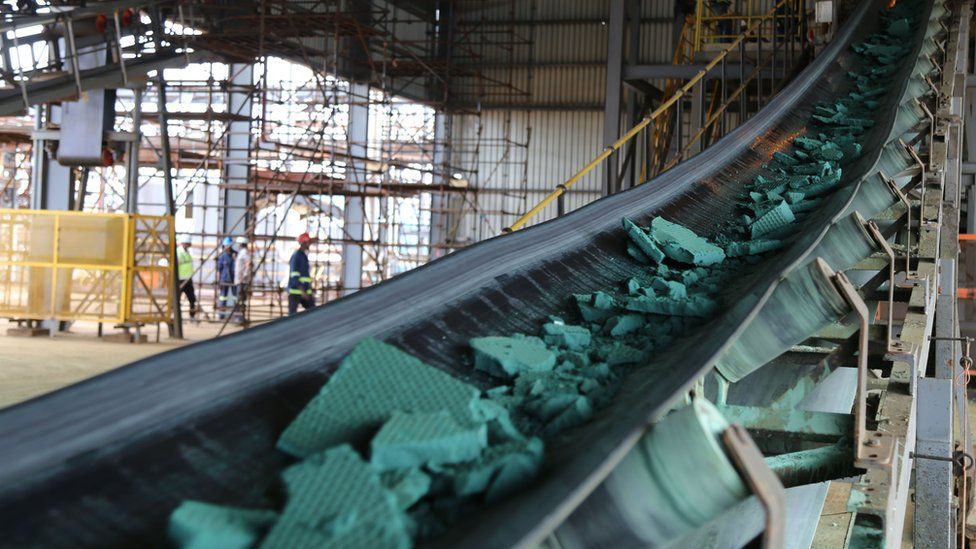
A conveyor belt carries chunks of Raw cobalt after a first transformation at a plant in Lubumbashi on February 16, 2018, before being exported, mainly to China, to be refined.image copyrightAFP
image captionDR Congo has huge mineral resources, including more than 60% of the world's cobalt

In DR Congo, Mr Gertler acted as a middleman between the country and multinational companies and also managed companies on behalf of Mr Kabila, according to the US sanctions announcement. Now that President Félix Tshisekedi, in power since 2019, is gradually wresting Mr Kabila's control over DR Congo's political establishment, the US wants Mr Gertler contained too.

Gained Bush's backing for Kabila

The football-loving son of a successful diamond-trading family in Tel Aviv, Mr Gertler arrived in DR Congo in 1997, shortly after Mr Kabila's father, Laurent-Desirée Kabila, came to power.

In 2000, when civil war risked ending Kabila's reign as suddenly as it had begun, Mr Gertler promised millions of dollars and, according to a United Nations report, access to arms - the two things that could best help the new leader stay in power. In return, he received a monopoly on DR Congo's substantial diamond exports.

Mr Gertler gained the trust of the younger Kabila, who took over as president when his father was assassinated in 2001.

line

You may also be interested in:

line

Engaged in war with US ally Rwanda, the young leader sent Mr Gertler to Washington to ask for President George W Bush's backing.

After lengthy discussions with Mr Gertler, the Bush administration agreed to support President Kabila, helping pave the way for a peace deal between the warring parties and entrenching Mr Kabila's rule.

Mr Gertler also became the country's honorary consul in Israel and received a diplomatic passport.

'$100m paid in bribes'

Companies controlled by Mr Gertler started sweeping up licences for mineral deposits all over the country.

Often, he helped multinationals, like Swiss commodities trader Glencore and New York hedge fund company Och-Ziff Capital Management, invest in large mining projects, pocketing his own enormous profits along the way.

Though the mining operations Mr Gertler pursued on his own were not hugely successful, it was not for want of trying.

He once sent helicopters carrying drill rigs deep into the Congolese jungle in search of iron ore. It turned out the project would have been far too expensive and complicated to be worth it.

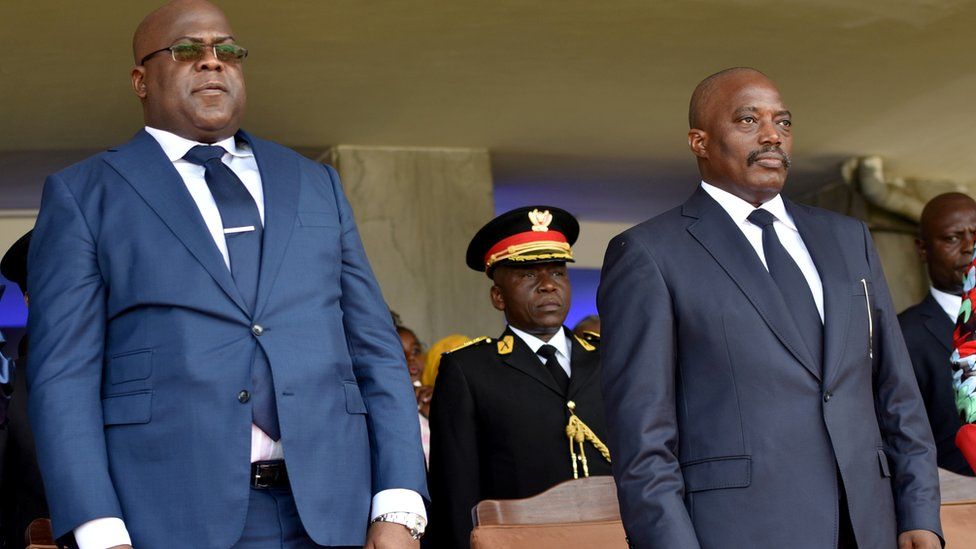
FILE PHOTO: Democratic Republic of Congo"s outgoing President Joseph Kabila and his successor Felix Tshisekedi stand during an inauguration ceremony in Kinshasa, Democratic Republic of Congo, January 24, 2019image copyrightReuters
image captionPresident Joseph Kabila (R) handed over power to Felix Tshisekedi (L) in January 2019

Before Och-Ziff invested with Mr Gertler, it commissioned a review into how he conducted his business.

He "has been willing to use his significant political influence with [Mr Kabila]... and his clique to facilitate acquisitions, settle disputes and frustrate competitors", Och-Ziff was told, according to the US Justice Department which later accepted a guilty plea and a fine from Och-Ziff for corruption offences.

Mr Gertler and Mr Kabila's names were anonymised in the Justice Department announcement, but their identities were separately confirmed.

In its deal with the Justice Department, Och-Ziff accepted that Mr Gertler had in fact paid at least $100m in bribes in DR Congo, something Mr Gertler denies.

He became one of Israel's wealthiest men and built an opulent triple-storey home with a wood-panelled lift in a poor neighbourhood outside Tel Aviv. He said he felt most at home there embedded in a Jewish community which shared his religious devotion.

A lorry with rocks in its load
Getty Images
[Dan Gertler] has always seen his mission as being to help the DRC recover from [its] long period of destruction and build a lasting, sustainable economic recovery"
Statement on Dan Gertler's website
1px transparent line

Over time, questions grew around the deals Mr Gertler was making and he invited journalists to see for themselves how his projects were benefitting DR Congo, even if the details relating to the allegedly corrupt deals were not explained.

His website states that "he has always seen his mission as being to help the DRC recover from [its] long period of destruction and build a lasting, sustainable economic recovery".

At a copper and cobalt project in southern DR Congo in 2012, Mr Gertler gleefully jumped behind the steering wheel of a bus to take visitors to a spot where the dry woodland had been cleared for an open pit mine and enormous processing machinery.

Swerving along the dirt track Mr Gertler waved around him. "It was jungle here," he boomed through the bus's public address system. "Jungle, jungle, jungle. I said: 'Guys, this is my baby, you have to find the copper.'"

That particular deposit did not yield much, but Mr Gertler was a beneficiary of some of DR Congo's biggest copper and cobalt mines.

Life under a new president

And the questions only grew.

The Och-Ziff case added detail to the allegations against him.

A report commissioned by the Africa Progress Panel said DR Congo had lost at least $1.36bn in deals Mr Gertler was involved in between 2010 and 2012 alone. And the US imposed sanctions.

Despite his travails, Mr Gertler's private jet has continued its regular trips to DR Congo.

While Mr Gertler's sanctions waiver did not last long, it is likely that it allowed him to sort out at least some of his financial affairs. A much bigger challenge will be preserving his dominance in DR Congo, where he has so far remained untouchable.

Since assuming power two years ago, President Tshisekedi has gradually choked off his predecessor's powerful influence.

In recent weeks, Mr Tshisekedi has brought in loyalists to head his government and parliament. For many Congolese, Mr Gertler embodies the corruption of the Kabila years. Whether Mr Gertler can remain influential under the current president could become his biggest challenge yet.